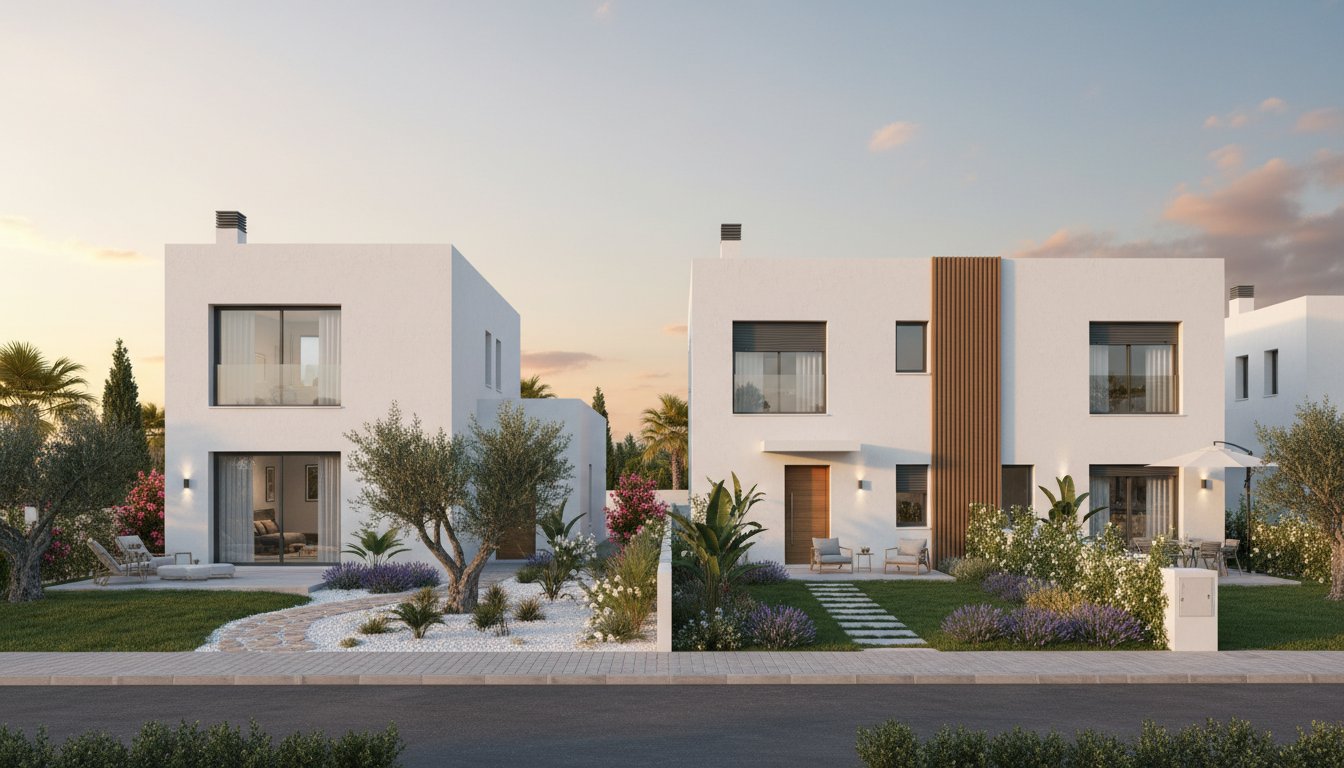
Detached vs. Semi-Detached House: Which is Right for You in Spain?
Beginning the search for your dream home in Spain is an exciting journey. As you browse through listings, you'll encounter various property terms that might be new or confusing, especially for international buyers. Two of the most common types are detached and semi-detached houses. Understanding the key differences in privacy, cost, and lifestyle between these homes is the first step to making the perfect choice for your new life in the sun.
Detached vs. Semi-Detached: The Core Difference Explained
To put it simply, the main distinction comes down to shared walls. A detached house is a completely standalone property that does not share any walls with another home. In contrast, a semi-detached house is one of a pair of houses joined together by one common wall, often as mirror images of each other. Let's look at each type more closely.
What is a Detached House (Chalet Independiente)?
A detached house, known in Spain as a chalet independiente or simply a chalet, stands entirely on its own plot of land. Because it isn't connected to any other building, it offers the highest level of privacy and seclusion. This type of property is typically surrounded by its own private garden space on all sides, giving you complete control over your home and its immediate surroundings.
What is a Semi-Detached House (Chalet Pareado)?
A semi-detached house, or chalet pareado, is paired with one other home, sharing a single central wall. This design offers a comfortable balance between the privacy of a standalone house and the community feel of a neighbourhood. While you have one direct neighbour, you still enjoy your own private entrance, garden, and the sense of having your own distinct home.
At a Glance: Detached vs. Semi-Detached Comparison
To help you see the differences clearly, here is a simple comparison of the key features:
| Feature | Detached House | Maison jumelée |
|---|---|---|
| Privacy Level | High | Moderate |
| Plot Size | Typically Larger | Typically Smaller |
| Cost | Generally Higher | More Affordable |
| Maintenance | Full Responsibility | Shared Wall Responsibility |
Choosing Your Dream Home: Pros and Cons for Life in Spain
The right choice for you depends entirely on your personal lifestyle goals, budget, and what you envision for your life in Spain. Whether you're looking for a permanent residence for your family or a peaceful holiday escape, considering the advantages and disadvantages of each property type is crucial.
Why Choose a Detached House?
- Pro: It offers the ultimate privacy and seclusion, with no shared walls to worry about.
- Pro: You have more freedom for renovations, extensions, and personalising the exterior.
- Pro: Detached properties often include larger gardens, private pools, and more outdoor space.
- Con: They typically come with a higher purchase price and can have higher running costs for maintenance and utilities.
Why Choose a Semi-Detached House?
- Pro: It's often a more affordable way to buy a house with a private garden.
- Pro: Living next to a neighbour can provide a greater sense of security and community.
- Pro: Many are located in well-maintained communities (urbanizaciones) with shared amenities like pools and gardens.
- Con: There is the potential for noise transfer from the adjoining property through the shared wall.
Making the Right Choice for You
Ultimately, the decision is a personal one. A detached villa is the ideal choice if your top priorities are maximum privacy, space, and the freedom to create your own personal oasis. For first-time buyers, those with a slightly smaller budget, or someone looking for a "lock-up-and-leave" holiday home with a sense of community, a semi-detached house can be the perfect solution. If you're ready to see what's available, feel free to explore our listings of detached and semi-detached properties to find the one that speaks to you.
Related Property Types in Spain: Townhouses and Villas
To make your property search even more effective, it's helpful to understand a few other common terms you'll encounter in Spanish real estate listings. Knowing the difference will allow you to filter your search with confidence and find exactly what you're looking for.
How is a Townhouse (Casa Adosada) Different?
A townhouse, or casa adosada, is similar to a semi-detached house but typically shares walls on both sides with its neighbours. These homes are built in a row or terrace and are a very common style in town centres and planned community developments. They offer an excellent community atmosphere but generally less privacy than a semi-detached home.
What Does 'Villa' Mean in Spain?
The term 'villa' is often used in Spain, particularly on the Costas, to describe a large, luxurious detached house. While any detached house can technically be called a villa, the term usually implies a more premium property. You can expect a villa to have a substantial plot of land, high-end finishes, and almost always its own private swimming pool.
Frequently Asked Questions
Are semi-detached houses cheaper to buy than detached houses in Spain?
Yes, generally speaking, a semi-detached house will have a lower purchase price than a comparable detached house in the same area due to the smaller plot size and shared structure.
Is noise a common problem in a semi-detached house?
This can vary depending on the quality of construction. Modern properties often have excellent sound insulation, minimising noise transfer. When viewing a property, it's always a good idea to ask about the soundproofing between the homes.
Are there rules for renovating or extending a semi-detached property?
Yes, any external modifications will require planning permission from the local town hall (ayuntamiento). If the property is part of a community of owners, you may also need their approval for changes that affect the building's exterior appearance.
Which property type has better resale value in Spain?
Both types have strong resale potential as they appeal to different buyers. Detached villas are always in demand for their privacy, while well-located semi-detached homes are popular with families and holiday home buyers. The key factors are always location, condition, and market trends.
Do I have to pay community fees for a semi-detached house?
If your semi-detached house is part of an urbanización with shared facilities like a communal pool, gardens, or roads, then yes, you will be required to pay community fees to cover the maintenance of these areas.
Choosing between a detached and a semi-detached home is a significant decision, but now you have the clear, essential information to guide your search. As your trusted, multilingual real estate partner in Spain, Red Rose Property Spain is here to provide comprehensive support from the first viewing to the final signing. With access to over 19,000 properties, we can make your Spanish property dream a simple and stress-free reality. Start your stress-free property search with us today!